
The Culinary Connoisseur
Plum Job
27
Oct
Oct
In the 17th century was slang for £1000, a very large sum
of money in those times. It often applied to some political jobs, thought to
involve little work for a lot of money. From there the word entered wider use
for an easy, choice job. Plum also meant soft so a plum job was a soft job, a metaphor still used today.
of money in those times. It often applied to some political jobs, thought to
involve little work for a lot of money. From there the word entered wider use
for an easy, choice job. Plum also meant soft so a plum job was a soft job, a metaphor still used today.
One of the unique things about plums is that there are so
many varieties available. Not only do over 2,000 varieties of plums exist, but
over 100 are available in the United States alone. So, if you are looking for a
juicy, sweet tasting fruit that comes in a panorama of colors, plums are for
you.
many varieties available. Not only do over 2,000 varieties of plums exist, but
over 100 are available in the United States alone. So, if you are looking for a
juicy, sweet tasting fruit that comes in a panorama of colors, plums are for
you.
There are few fruits that come in such a panorama of
colors as the juicy sweet plum. The plum season extends from May through
October, peaking in August. There are dozens of species and their shapes and
colors vary. Although they are usually round, plums can also be oval or
heart-shaped. The skins of plums can be red, purple, blue-black, red, green,
yellow or amber, while their flesh comes in hues such as yellow, green and pink
and orange – a virtual rainbow.
colors as the juicy sweet plum. The plum season extends from May through
October, peaking in August. There are dozens of species and their shapes and
colors vary. Although they are usually round, plums can also be oval or
heart-shaped. The skins of plums can be red, purple, blue-black, red, green,
yellow or amber, while their flesh comes in hues such as yellow, green and pink
and orange – a virtual rainbow.
With the large number of plums available, it is not
surprising that the various types have different places of origin. The European plum is thought to have been
discovered around two thousand years ago, originating in the area near the
Caspian Sea. Even in ancient Roman times, there were already over 300 varieties
of European plums. European plums made their way across the Atlantic Ocean with
the pilgrims, who introduced them into the United States in the 17th
century. Japanese plums were introduced
to the U.S. in the late 19th century.
Today, the United States, Russia, China and Romania are among the main
producers of commercially grown plums. Plums are now the second most cultivated fruit
in the world, second only to apples.
surprising that the various types have different places of origin. The European plum is thought to have been
discovered around two thousand years ago, originating in the area near the
Caspian Sea. Even in ancient Roman times, there were already over 300 varieties
of European plums. European plums made their way across the Atlantic Ocean with
the pilgrims, who introduced them into the United States in the 17th
century. Japanese plums were introduced
to the U.S. in the late 19th century.
Today, the United States, Russia, China and Romania are among the main
producers of commercially grown plums. Plums are now the second most cultivated fruit
in the world, second only to apples.
Plums are a good source of vitamin A, beta-carotene,
vitamin B2, vitamin C, dietary fiber and potassium. Plums also promote absorption of iron into
the body. They are relatives of the
peach, nectarine and almond.
vitamin B2, vitamin C, dietary fiber and potassium. Plums also promote absorption of iron into
the body. They are relatives of the
peach, nectarine and almond.
Plums can be eaten fresh or used in jam-making or other
recipes. Plum juice can be fermented into plum wine; as well as a brandy known
in Eastern Europe as Slivovitz.
recipes. Plum juice can be fermented into plum wine; as well as a brandy known
in Eastern Europe as Slivovitz.
When buying plums, select unwrinkled, smooth-skinned
fruits with no blemishes, free of soft spots or discolorations. If the plums
seem a little hard, leave them at room temperature for a few days to soften up,
but they will not actually ripen further.
Refrigerate ripe plums in a plastic bag and use within four days. Plums
and prunes can be frozen for later use. Adding
plums to fruit compotes will yield deep red and purple color. Most of the color is from the skin so be sure
to leave it on.
fruits with no blemishes, free of soft spots or discolorations. If the plums
seem a little hard, leave them at room temperature for a few days to soften up,
but they will not actually ripen further.
Refrigerate ripe plums in a plastic bag and use within four days. Plums
and prunes can be frozen for later use. Adding
plums to fruit compotes will yield deep red and purple color. Most of the color is from the skin so be sure
to leave it on.
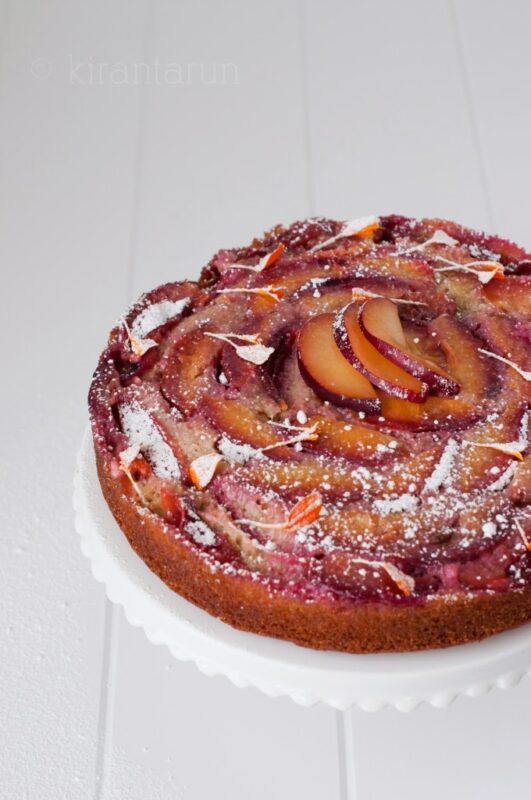
Use some of these tasty plums in our upside down cake.
It’s a large recipe for so you can eat one now and put the second in the
freezer for Yom Tov.
It’s a large recipe for so you can eat one now and put the second in the
freezer for Yom Tov.
For the fruit syrup:
1 cup (2 sticks) margarine, room temperature
3 tablespoons maple syrup
1 teaspoon vanilla extract
2 cups light-brown sugar, packed
1/2 teaspoon kosher salt
2 1/2 pounds plums, about 10 to 15
3 cups flour, plus more for pans
1 tablespoon baking powder
1 cup (2 sticks) margarine
1 3/4 cups sugar, plus more for sprinkling fruit
4 large eggs
2 teaspoons pure vanilla extract
1 1/4 orange juice
Preheat oven to 350 degrees.
In the bowl of a
stand mixer fitted with the paddle attachment, combine the margarine, maple
syrup, sugar, vanilla extract, and salt until well blended.
stand mixer fitted with the paddle attachment, combine the margarine, maple
syrup, sugar, vanilla extract, and salt until well blended.
Spray two 9 inch round cake pans or three 12-cup standard
muffin tins with baking spray; if using cake pans, line the bottoms with
parchment paper and spray the paper as well. Divide fruit syrup evenly among
cake pans or muffin tins and spread with an offset spatula to make smooth.
muffin tins with baking spray; if using cake pans, line the bottoms with
parchment paper and spray the paper as well. Divide fruit syrup evenly among
cake pans or muffin tins and spread with an offset spatula to make smooth.
Slice fruit into 1/4-inch wedges. Starting from the
inside and working outwards, arrange fruit slices in a fanlike, circular
pattern on top of syrup. If you are making mini upside-down cakes, slice fruit
into circular slices about 1/4-inch thick, using one round slice per muffin cup.
You can also use thin wedges or small slices, and arrange in a decorative
fashion.
inside and working outwards, arrange fruit slices in a fanlike, circular
pattern on top of syrup. If you are making mini upside-down cakes, slice fruit
into circular slices about 1/4-inch thick, using one round slice per muffin cup.
You can also use thin wedges or small slices, and arrange in a decorative
fashion.
Make the cake:
In the bowl of an electric mixer fitted with the paddle
attachment, beat the margarine and sugar until light and fluffy, 3 to 4
minutes, scraping down the sides of the bowl as needed. Beat in eggs, one at a
time, and then beat in vanilla. Stir in the orange juice. With the mixer on low
speed, add the flour and baking powder.
attachment, beat the margarine and sugar until light and fluffy, 3 to 4
minutes, scraping down the sides of the bowl as needed. Beat in eggs, one at a
time, and then beat in vanilla. Stir in the orange juice. With the mixer on low
speed, add the flour and baking powder.
Divide the batter between the prepared pans, and carefully
smooth with an offset spatula over the arranged fruit. Bake, rotating the pans
halfway through, until the cakes are golden brown and a cake tester inserted in
the center comes out clean, 40-45 minutes for the 9 inch cakes, or 20 to 25
minutes for the mini upside-down cakes.
smooth with an offset spatula over the arranged fruit. Bake, rotating the pans
halfway through, until the cakes are golden brown and a cake tester inserted in
the center comes out clean, 40-45 minutes for the 9 inch cakes, or 20 to 25
minutes for the mini upside-down cakes.
Transfer pans to a
wire rack to cool 30 minutes, or 20 minutes for minis. Loosen side of cake with
small offset spatula or paring knife. Invert cakes onto a rack set atop a
baking sheet; peel off the parchment if you made it in the cake pans. Serve
warm or cool.
wire rack to cool 30 minutes, or 20 minutes for minis. Loosen side of cake with
small offset spatula or paring knife. Invert cakes onto a rack set atop a
baking sheet; peel off the parchment if you made it in the cake pans. Serve
warm or cool.
Ok
Thanks!