
The Culinary Connoisseur
Plank It!
27
Oct
Oct
If you think you’re an expert at the grill and you have
mastered every technique, it’s time to try planking! Put simply, planking is
cooking food directly on a piece of hardwood. When cooked this way, the food
touching the wood picks up some of the plank’s natural flavors. Although
there’s some debate on the origins of planking, it’s been documented that
Native Americans in the Pacific Northwest pinned their salmon to large wood
boards, then slow cooked them—planking.
mastered every technique, it’s time to try planking! Put simply, planking is
cooking food directly on a piece of hardwood. When cooked this way, the food
touching the wood picks up some of the plank’s natural flavors. Although
there’s some debate on the origins of planking, it’s been documented that
Native Americans in the Pacific Northwest pinned their salmon to large wood
boards, then slow cooked them—planking.
Salmon is a commonly planked food but in actuality any
food cooked on a grill can be planked from fish to chicken to beef to
vegetables.
food cooked on a grill can be planked from fish to chicken to beef to
vegetables.
Grilling planks are cut from a variety of trees. Some,
like oak or hickory have strong flavors and are best used with beef. Others
like maple, apple and pecan wood are a bit milder and lend themselves to
chicken. For delicate foods, like fish,
the more gentle flavors of woods like cedar and alder are a good match. Each
wood has its own uniqueness, so it’s worth picking up a variety and playing
around to see how each imparts a different flavor. Taste here can be incredibly
subjective.
like oak or hickory have strong flavors and are best used with beef. Others
like maple, apple and pecan wood are a bit milder and lend themselves to
chicken. For delicate foods, like fish,
the more gentle flavors of woods like cedar and alder are a good match. Each
wood has its own uniqueness, so it’s worth picking up a variety and playing
around to see how each imparts a different flavor. Taste here can be incredibly
subjective.
Plank preparation is very important to achieving smoky
but not burnt flavor. Planks must be soaked in water for at least 30 minutes
prior to grilling to avoid over-charring or catching fire. Rimmed sheet pans
are perfect for soaking planks—just place a plank in the pan, add enough water
to completely cover it, then weigh the plank down to keep it submerged (try using
a medium-sized pot for this). It’ best to soak planks for a minimum of an hour,
flipping halfway through to ensure they’re evenly and thoroughly soaked. Some
experts suggest using other liquids to soak the plank—like apple juice or wine—as
they add both extra flavor and aroma to the food being cooked on the plank.
but not burnt flavor. Planks must be soaked in water for at least 30 minutes
prior to grilling to avoid over-charring or catching fire. Rimmed sheet pans
are perfect for soaking planks—just place a plank in the pan, add enough water
to completely cover it, then weigh the plank down to keep it submerged (try using
a medium-sized pot for this). It’ best to soak planks for a minimum of an hour,
flipping halfway through to ensure they’re evenly and thoroughly soaked. Some
experts suggest using other liquids to soak the plank—like apple juice or wine—as
they add both extra flavor and aroma to the food being cooked on the plank.
The simplest method for grilling on a plank is to prepare
a two-zone cooking area—one hotter than the other. Place the plank over the hot
side of the grill. Let it go until it just starts to smoke, then flip the
plank, place the food on the charred side, and move it to the cool side of the
grill, cover, and cook.
a two-zone cooking area—one hotter than the other. Place the plank over the hot
side of the grill. Let it go until it just starts to smoke, then flip the
plank, place the food on the charred side, and move it to the cool side of the
grill, cover, and cook.
Starting on a scorched and smoking plank gives a deep
wood flavor.
wood flavor.
As long as the plank hasn’t been charred through and
through, you can reuse it. To clean a
plank, start by scrubbing it down with water and a scouring pad without
soap—you don’t want soap soaking into the plank and staying there. If there’s
some excess food that just won’t dislodge, then you can use some sandpaper to
rub it off until the plank is clean. Let it completely dry out before storing
it away to prevent molding.
through, you can reuse it. To clean a
plank, start by scrubbing it down with water and a scouring pad without
soap—you don’t want soap soaking into the plank and staying there. If there’s
some excess food that just won’t dislodge, then you can use some sandpaper to
rub it off until the plank is clean. Let it completely dry out before storing
it away to prevent molding.
Once the food is done, either remove the whole plank with
a pair of grilling mitts or slide the food onto a platter using a spatula.
a pair of grilling mitts or slide the food onto a platter using a spatula.
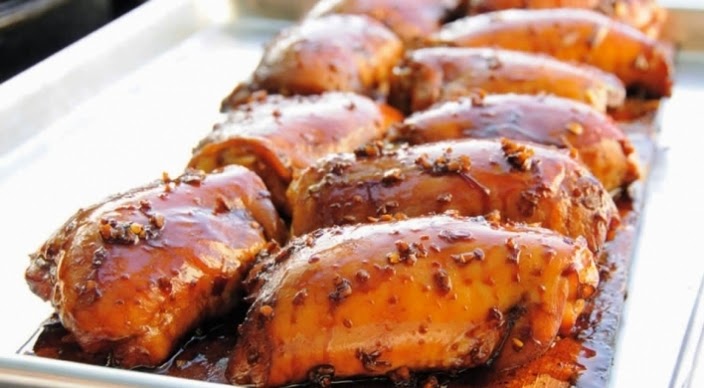
For the glaze
¾ cup soy sauce
½ cup balsamic vinegar
½ cup packed brown sugar
1 tablespoon crushed garlic
1 tablespoon minced fresh ginger
1 teaspoon crushed red pepper flakes
¼ cup toasted sesame oil
10 skinless chicken thighs (with bone), each 5 to 6
ounces
ounces
Soak the cedar plank in water for at least 1 hour.
In a small saucepan over medium-low heat, combine
the soy sauce, vinegar, and sugar. Cook until reduced by half, about 20
minutes. Remove from the heat and add the garlic, ginger, and red pepper
flakes. Cool slightly and then whisk in the oil. Reserve ½ cup of the
glaze for basting the chicken.
the soy sauce, vinegar, and sugar. Cook until reduced by half, about 20
minutes. Remove from the heat and add the garlic, ginger, and red pepper
flakes. Cool slightly and then whisk in the oil. Reserve ½ cup of the
glaze for basting the chicken.
Put the thighs in a large bowl or zip-loc bag, pour in
the glaze, and toss to coat. Refrigerate until you are ready to grill.
the glaze, and toss to coat. Refrigerate until you are ready to grill.
Prepare the grill for direct and indirect cooking or
medium and low heat. Place the soaked plank over direct medium heat
and close the lid. After 5 to 10 minutes, when the plank begins
to smoke and char, turn the plank over.
medium and low heat. Place the soaked plank over direct medium heat
and close the lid. After 5 to 10 minutes, when the plank begins
to smoke and char, turn the plank over.
Remove the thighs from the bowl and discard the
glaze. Arrange the thighs on the smoking plank and cook over
direct medium heat, with the lid closed, for 5 to 10 minutes.
Then move the plank over indirect medium heat and continue cooking,
with the lid closed, until the juices run clear, 20 to 30 minutes, basting occasionally
with the reserved glaze during the last 10 to 15 minutes of
grilling time. Remove from the grill and baste with the glaze once
more before serving.
glaze. Arrange the thighs on the smoking plank and cook over
direct medium heat, with the lid closed, for 5 to 10 minutes.
Then move the plank over indirect medium heat and continue cooking,
with the lid closed, until the juices run clear, 20 to 30 minutes, basting occasionally
with the reserved glaze during the last 10 to 15 minutes of
grilling time. Remove from the grill and baste with the glaze once
more before serving.
Serves 5-6
1 cup pure maple
syrup
syrup
2 tablespoons Dijon
mustard
mustard
4 tablespoons
lemon juice
lemon juice
3 tablespoons
soy sauce
soy sauce
1 1/2 teaspoons crushed
garlic
garlic
Salt and pepper
to taste
to taste
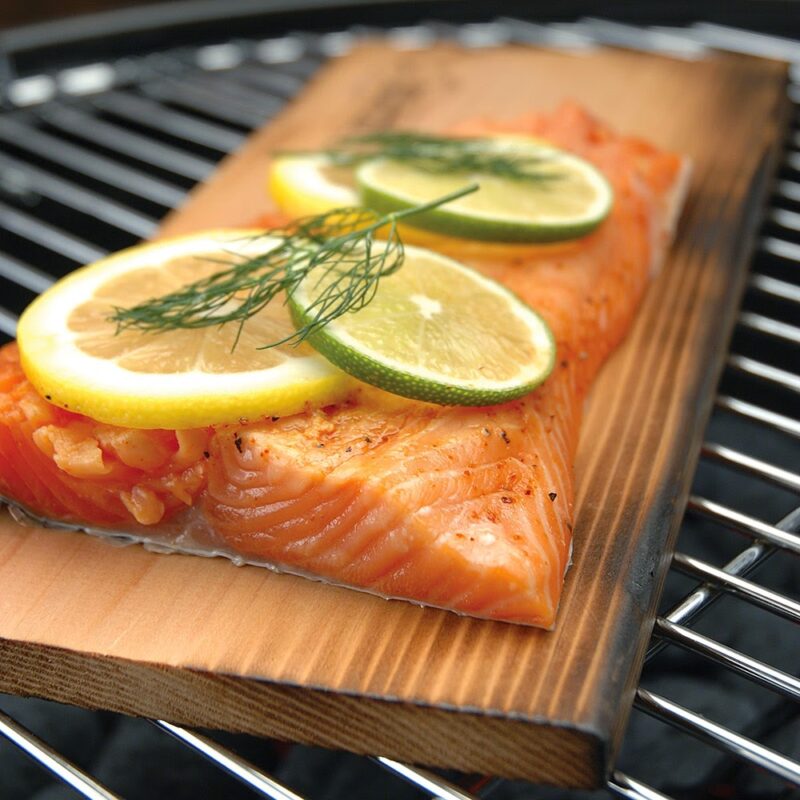
an untreated
cedar plank (about 17 by 10 1/2 inches)
cedar plank (about 17 by 10 1/2 inches)
2 1/2-pound
center-cut whole salmon fillet with skin
center-cut whole salmon fillet with skin
1 bunch
scallions, checked and sliced lengthwise
scallions, checked and sliced lengthwise
In a small heavy saucepan simmer maple syrup, mustard,
lemon juice, soy sauce, garlic, and salt and pepper to taste until reduced to
about 1 cup, about 30 minutes, and let cool. Divide glaze in half—one part to
be used on the raw salmon the other on the cooked.
lemon juice, soy sauce, garlic, and salt and pepper to taste until reduced to
about 1 cup, about 30 minutes, and let cool. Divide glaze in half—one part to
be used on the raw salmon the other on the cooked.
Prepare the grill for direct and indirect cooking or
medium and low heat. Place the soaked plank over direct medium heat
and close the lid. After 5 to 10 minutes, when the plank begins
to smoke and char, turn the plank over.
medium and low heat. Place the soaked plank over direct medium heat
and close the lid. After 5 to 10 minutes, when the plank begins
to smoke and char, turn the plank over.
Lightly oil the plank and arrange scallions in one layer
on plank to form a bed for fish. Place
salmon filet, skin side down on the plank and brush generously with glaze. Season the salmon with salt and freshly
ground pepper. Move the plank over cooler side of the grill and
continue cooking, with the lid closed for 20 minutes. Remove plank from grill to serve. Drizzle
salmon with reserved sauce.
on plank to form a bed for fish. Place
salmon filet, skin side down on the plank and brush generously with glaze. Season the salmon with salt and freshly
ground pepper. Move the plank over cooler side of the grill and
continue cooking, with the lid closed for 20 minutes. Remove plank from grill to serve. Drizzle
salmon with reserved sauce.
Serves 6