
The Culinary Connoisseur
Continuing our Culinary Adventures—On to Poland!
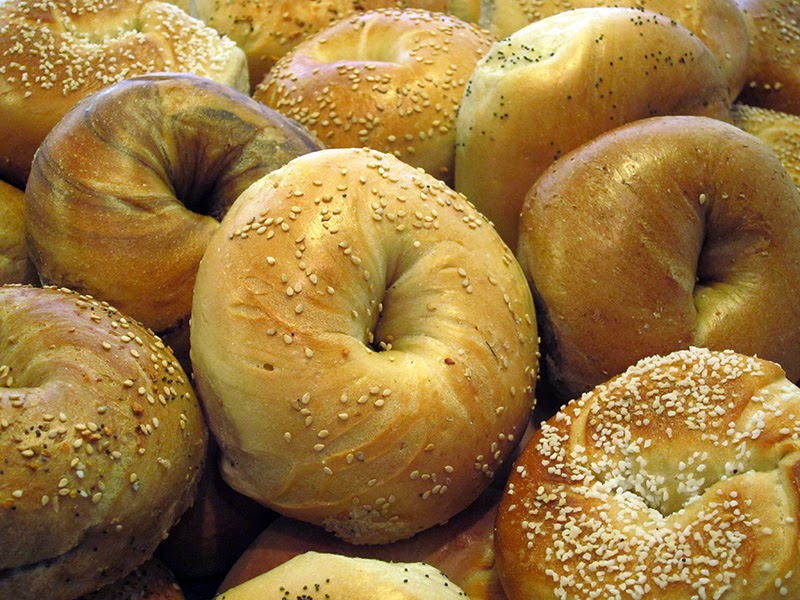
Jun
History has shown a Jewish presence in Poland since the
900’s. It is believed Jews from Prague and Bohemia settled there when they were
expelled from their native countries during the Crusades. For centuries Polish
kings passed laws allowing Jews to live in relative peace and extended royal
protection to all Jewish settlers. In return the Jewish people living there
were profoundly loyal to the reigning king. Jews became tradesmen and merchants
and facilitated trade between Poland and many other countries.
Jewish population in Poland grew every year until it numbered more than 3
million.
numerous dishes that originate in Poland. Blintzes, kugels, knaidlach, kreplach
and rugelach are all believed to have been invented there. These popular dishes
spread to neighboring countries of Germany and Hungary where they were tweaked
to fit local cuisine. But without a doubt, the most famous Jewish food to
originate in Poland is the bagel!
your local bake shop, some intrepid cooks will want to try making them at
home—just like they did for centuries in Poland!
rise)
4 cups high-gluten flour or bread flour 1 tsp. instant yeast (not active dry)
2-1/2 cups lukewarm water (about 70°F)
4 cups high-gluten flour plus more as needed
1-1/2 Tablespoons kosher salt
2 tsp. malt powder or 1 Tbs. malt syrup (available at
natural food stores)
1 tablespoon baking soda
Cornmeal
Sesame seeds, poppy seeds, kosher salt, finely chopped onions
tossed in a little oil
Add the water, whisking or stirring only until it forms a smooth, sticky dough.
Cover with plastic wrap and leave at room temperature until the mixture is very
foamy and bubbly, 1 to 2 hours. It should swell to nearly double in size.
yeast. In a bowl, mix 3 cups of the flour with the salt. Add it to the sponge,
along with the malt. Using a dough hook, mix on the lowest speed, slowly
working in the remaining flour until the dough is stiff, and satiny; you may need extra flour. Keep
kneading on low until the dough is firm but still pliable and smooth, about 6
minutes.
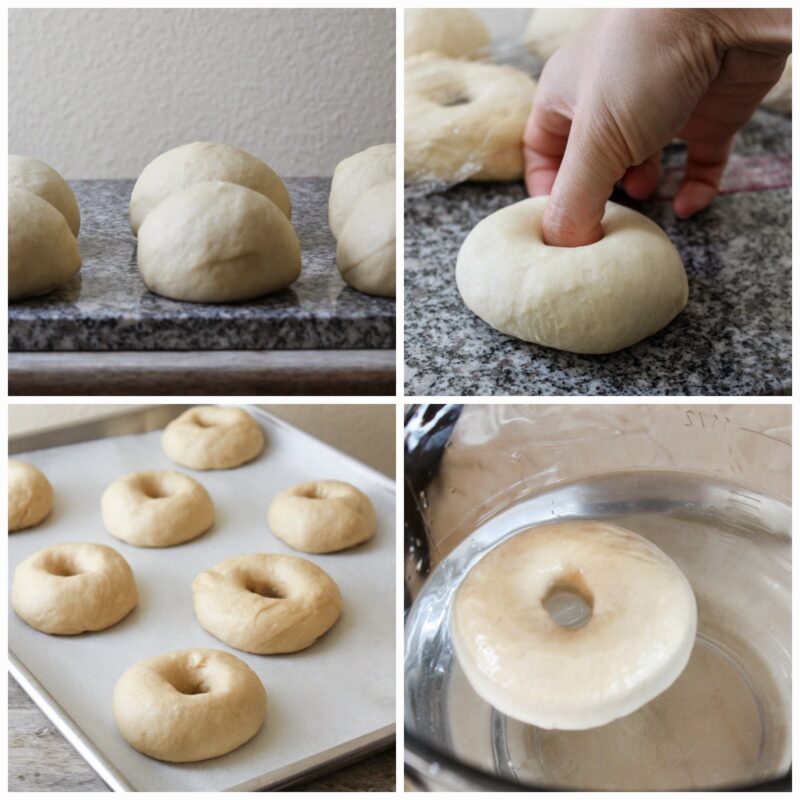
4-3/4 oz. Shape each piece into a smooth ball by pulling the dough down and
around to one point on the bottom and then pinching the bottom closed. Cover
with a damp towel and let rest for 20 minutes so the gluten relaxes.
parchment with canola oil.
ball of dough with your thumb and then gently rotate the dough around both
thumbs, slightly squeezing and stretching the dough little by little as you
turn until the hole has enlarged to 1-1/2 to 2 inches. The dough ring should be
an even thickness all around.
inches apart. Mist the bagels very lightly with oil and cover the pans with
plastic (the wrap keeps the dough from developing a skin, which would restrict
the rise). Let the bagels sit at room temperature until they swell slightly.
they’re ready to be set in the refrigerator: Drop one bagel a bowl of water. If
it floats within 10 seconds, the bagels are ready for the overnight rise. Pat
dry the test bagel and return it to the pan. (If it doesn’t float within 10
seconds, shake or pat it dry, return it to the pan, and test again every 10
minutes until it floats.) Refrigerate the pans, still covered, for at least 8
hours, or up to two days.
500°F. Bring a large wide pot of water to a boil and add the baking soda; have
ready a slotted spoon or skimmer. Remove one pan of bagels from the refrigerator.
Move the parchment with the bagels off the pan and onto the counter. Line the
pan with a clean sheet of parchment, mist with oil, and sprinkle with cornmeal.
many as will comfortably fit; they should float within 10 seconds, if not
immediately. Boil for 1 minute, flip them over, and boil for another 1 minute.
For very chewy bagels, boil for 2 minutes per side.
skimmer and set them on the baking sheet with the cornmeal. Sprinkle with
sesame or poppy seeds, kosher salt, chopped onions, or minced garlic.
bake for 10 minutes, rotate the pan for even browning, and then continue baking
until golden brown on top and bottom and very firm, about another 5 minutes.
Remove the pan from the oven and transfer the bagels to a cooling rack. Let
cool for at least 10 minutes. Remove the second pan of bagels from the fridge
and boil and bake them the same way.