
The Culinary Connoisseur
Our Culinary Travels Continue—Jewish Food in Spain
While our first thoughts of Sephardic food may bring to
mind Syrian or Moroccan dishes, Sephardim all originate from Sepharad or
Spain! It was during the 1400’s and the Spanish Inquisition that Sephardic Jews
emigrated to the Middle East and Northern Africa. Once Sephardic Jews moved on
to more tolerant countries they brought along Spanish culinary traditions and
combined them with local cuisines. But some dishes have remained truly Spanish.
mind Syrian or Moroccan dishes, Sephardim all originate from Sepharad or
Spain! It was during the 1400’s and the Spanish Inquisition that Sephardic Jews
emigrated to the Middle East and Northern Africa. Once Sephardic Jews moved on
to more tolerant countries they brought along Spanish culinary traditions and
combined them with local cuisines. But some dishes have remained truly Spanish.
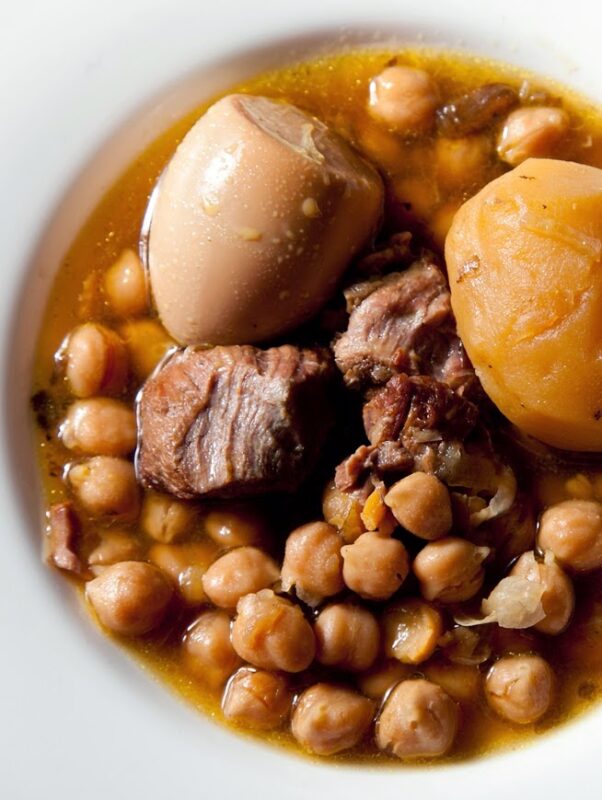
Hamin (or chamin) refers to a hot dish cooked overnight
and served on Shabbos. History tells us that the food was placed in a clay pot
and buried in the ground under red hot ashes and left to cook in that manner
overnight. Nowadays you can make in a slow cooker or crock pot.
and served on Shabbos. History tells us that the food was placed in a clay pot
and buried in the ground under red hot ashes and left to cook in that manner
overnight. Nowadays you can make in a slow cooker or crock pot.
It usually includes stuffed vegetables in addition to
meat or chicken and chickpeas. Sephardim also add spices such as cumin and hot
peppers. The ingredients and spiciness of hamin varies from area to area. Jews
from Spain make a version called adafina, which calls for spices like garlic,
cinnamon, allspice, ginger, and pepper, as well as whole eggs that turn brown
and creamy during the long cooking process. The brown eggs, called haminados
are shelled before serving and placed on top of the other cooked ingredients.
meat or chicken and chickpeas. Sephardim also add spices such as cumin and hot
peppers. The ingredients and spiciness of hamin varies from area to area. Jews
from Spain make a version called adafina, which calls for spices like garlic,
cinnamon, allspice, ginger, and pepper, as well as whole eggs that turn brown
and creamy during the long cooking process. The brown eggs, called haminados
are shelled before serving and placed on top of the other cooked ingredients.
For the meat:
 1 large onion diced
2 ½ pounds of beef flanken or ribs and
beef bones
1/2 cup chickpeas
1/2 cup of white beans
2 medium sized potatoes, cubed
1 medium sized sweet potatoes, cubed
Salt & pepper to taste
½ teaspoon turmeric
¼ teaspoon nutmeg
½ teaspoon
cinnamon
¼ teaspoon paprika
Pinch of cayenne pepper
Canola oil
for the rice:
1 cup rice
1 small onion, diced
1 small sweet potato, diced
1/2 teaspoon cinnamon
1 teaspoon of cumin
Pinch of nutmeg
1/2 teaspoon of turmeric
1 teaspoon of salt
Pinch of pepper
2 tablespoons canola oil
4 eggs, raw in their shells
cooking or roasting bags
Water to cover
Dice and sauté the onion until it is golden. Cut the beef into chunks and brown
together with the onions.
After the beef is browned, add chickpeas and beans, potatoes and sweet
potatoes. Add the spice as directed or to taste. Place this mixture in a
cooking bag in your slow cooker.
In a separate bowl mix together the rice, sweet potato and diced onion. Add oil
and two cups of water. Place rice mixture into a separate cooking bag and place
in the slow cooker. Cover bags with water. Add eggs in their shells. Cook
everything together on low heat for 12 hours.
Open the bags into separate bowls and serve each separately with the eggs on
top.
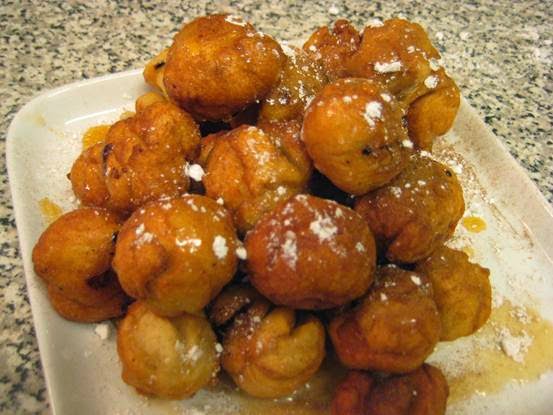
You don’t have to wait for Chanukah to try this tasty
treat!
treat!
 3 1/2 cups flour
 1 tablespoon plus 1 teaspoon sugar
3/4 teaspoon salt
1 tablespoon active dry yeast
1 1/2 cups warm water, divided
juice of 1 large orange, strained of pulp (about 1/3 cup), divided
1 teaspoon finely grated orange zest
2 tablespoons vegetable oil, plus more for frying
1 cup honey
Combine flour, 1 tablespoon sugar and salt in a large
bowl. Set aside. Pour 1/2 cup water into a large bowl. Sprinkle sugar and yeast
over water and wait until mixture become foamy, about 10 minutes. Add flour
mixture, remaining water, 3 tablespoons orange juice, orange zest, and 2
tablespoons oil to yeast mixture and stir with a wooden spoon to combine, about
30 seconds.
Using your hands, knead dough in bowl until smooth, adding 1 tablespoon of
additional flour at a time to reduce stickiness, for about 1-2 minutes. Remove
dough and place in a clean, lightly oiled bowl. Cover with a clean kitchen
towel and let rest until dough has doubled in volume, about 1 to 1 1/2 hours.
Heat oil in a large stockpot pot to about 350-360 degrees on a deep fry
thermometer. Lightly oil hands, form dough into
walnut-sized balls, and drop into oil in batches. Fry until golden brown on
both sides, about 3-4 minutes total. Remove with a slotted spoon and drain on
paper towels.
Place honey and remaining orange juice in a small saucepan and simmer 3-4
minutes until warm. Drizzle honey over bimuelos and serve.
bowl. Set aside. Pour 1/2 cup water into a large bowl. Sprinkle sugar and yeast
over water and wait until mixture become foamy, about 10 minutes. Add flour
mixture, remaining water, 3 tablespoons orange juice, orange zest, and 2
tablespoons oil to yeast mixture and stir with a wooden spoon to combine, about
30 seconds.
Using your hands, knead dough in bowl until smooth, adding 1 tablespoon of
additional flour at a time to reduce stickiness, for about 1-2 minutes. Remove
dough and place in a clean, lightly oiled bowl. Cover with a clean kitchen
towel and let rest until dough has doubled in volume, about 1 to 1 1/2 hours.
Heat oil in a large stockpot pot to about 350-360 degrees on a deep fry
thermometer. Lightly oil hands, form dough into
walnut-sized balls, and drop into oil in batches. Fry until golden brown on
both sides, about 3-4 minutes total. Remove with a slotted spoon and drain on
paper towels.
Place honey and remaining orange juice in a small saucepan and simmer 3-4
minutes until warm. Drizzle honey over bimuelos and serve.
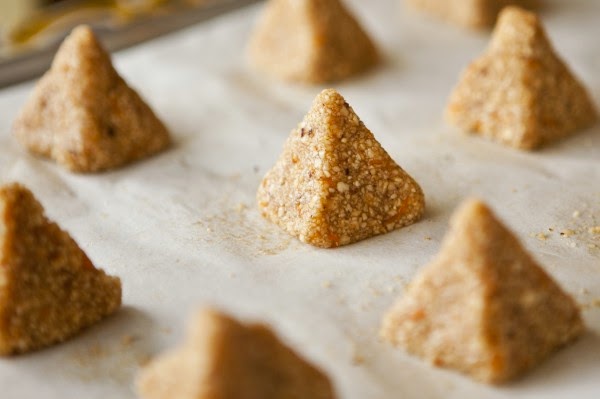
A popular Spanish nut cookie that is delicious Pesach
as well as all year!
as well as all year!
 4 cups chopped toasted hazelnuts
2/3 cup sugar
1 teaspoon vanilla extract
1/2 teaspoon cinnamon
1/2 teaspoon ground cloves
2 large eggs, lightly beaten
zest of 1 large orange
Mix all the ingredients with a fork until they hold
together in a dense paste. Cover the paste in a bowl and chill it for 20
minutes in the refrigerator.
together in a dense paste. Cover the paste in a bowl and chill it for 20
minutes in the refrigerator.
Preheat the oven to 325 degrees.
Line cookie sheets with baking parchment or Silpats.
Moisten your hands lightly with cold water, divide the paste into 30 balls and
compact them well by rolling them between your palms. Space the balls one inch
apart on the cookie sheets.
Moisten your hands lightly with cold water, divide the paste into 30 balls and
compact them well by rolling them between your palms. Space the balls one inch
apart on the cookie sheets.
Press each ball into a pyramid. Form the base first:
using your thumb and first two fingers, push straight down on the ball to
flatten the bottom against the cookie sheet. Turn the cookie on its side
and this time press down at an angle, to form the first triangular side. Rotate
90° and repeat, making sure the second side is equal in size to the first.
Repeat on the remaining two sides, for a total of four triangular sides plus
the square bottom.
using your thumb and first two fingers, push straight down on the ball to
flatten the bottom against the cookie sheet. Turn the cookie on its side
and this time press down at an angle, to form the first triangular side. Rotate
90° and repeat, making sure the second side is equal in size to the first.
Repeat on the remaining two sides, for a total of four triangular sides plus
the square bottom.
Bake for 20 minutes. Mustachudos should be lightly
toasted, at most. Don’t let them brown (they’ll dry out and crack), and don’t
worry if they come out of the oven looking a little pale. Transfer to a plate
or wire rack to cool.
toasted, at most. Don’t let them brown (they’ll dry out and crack), and don’t
worry if they come out of the oven looking a little pale. Transfer to a plate
or wire rack to cool.
If you prefer to prepare these nutty cookies with less
effort simply press the batter into a parchment lined cookie sheet and bake 10
minutes. Remove from oven and cut in squares. Cool and serve.
effort simply press the batter into a parchment lined cookie sheet and bake 10
minutes. Remove from oven and cut in squares. Cool and serve.