
The Culinary Connoisseur
What A Melon!

08
Jul
Jul
Summertime is time to enjoy fresh, juicy melons! Peak melon flavor will last intoSeptember and October so make the most of these succulent fruits in appetizers
and desserts.
There are countless varieties of melons, ranging in size
from the tiny horned melon to huge 150-pound watermelons so large they will
feed an extended family picnic.
from the tiny horned melon to huge 150-pound watermelons so large they will
feed an extended family picnic.
Melons are the edible fruits that belong to the gourd and
squash family and are divided into two categories: muskmelon and watermelon.
Melons have been enjoyed for thousands of years in many countries and are
thought to have originated in Persia.
squash family and are divided into two categories: muskmelon and watermelon.
Melons have been enjoyed for thousands of years in many countries and are
thought to have originated in Persia.
Muskmelons include such varieties as cantaloupes,
honeydew and galia melons. Muskmelon
varieties have either netted skin, like cantaloupes, or smooth skin, like
honeydew and casaba melons. Other muskmelons include Spanish, Persian, winter
and Crenshaw varieties. All muskmelons contain seeds and have a hollow center
with fibrous material.
honeydew and galia melons. Muskmelon
varieties have either netted skin, like cantaloupes, or smooth skin, like
honeydew and casaba melons. Other muskmelons include Spanish, Persian, winter
and Crenshaw varieties. All muskmelons contain seeds and have a hollow center
with fibrous material.
Because melons are highly perishable, growers pick them
early, sometimes making it difficult to choose a flavorful melon. Choose melons
that are heavy for their size and free of bruises. If a shriveled stem is still attached, it was
picked too soon. When ripe melons are picked, the stem falls off easily,
leaving a small, clean depression. After checking the stem end, flip the
melon over and check the blossom end. It should be fragrant and yield a
bit when pressed. A melon’s ripeness can also be detected by a
delicate aroma, or by tapping it lightly for a hollow sound. Store melons in the refrigerator once they
have ripened. After you have cut open a melon, keep it tightly
covered in plastic.
early, sometimes making it difficult to choose a flavorful melon. Choose melons
that are heavy for their size and free of bruises. If a shriveled stem is still attached, it was
picked too soon. When ripe melons are picked, the stem falls off easily,
leaving a small, clean depression. After checking the stem end, flip the
melon over and check the blossom end. It should be fragrant and yield a
bit when pressed. A melon’s ripeness can also be detected by a
delicate aroma, or by tapping it lightly for a hollow sound. Store melons in the refrigerator once they
have ripened. After you have cut open a melon, keep it tightly
covered in plastic.
Always wash melon’s rind in warm soapy water before
cutting to get rid of any bacteria on the rind that might be carried inside by
the knife blade when cutting open the melon. Remove all seeds and strings
before serving.
cutting to get rid of any bacteria on the rind that might be carried inside by
the knife blade when cutting open the melon. Remove all seeds and strings
before serving.
Cantaloupes are among the most popular because they’re
easy to select and very sweet. Ripe cantaloupes have dull yellow
backgrounds below the bumpy netting. Honeydew melons can have either
green or orange flesh. Perfectly ripe honeydew will yield just a bit to
pressure at the blossom end and have a smooth, velvety rind. Canary
melons have bright yellow rinds and light green flesh that blends towards
orange in the center of the melon. They
should be heavy and have a distinct aroma. They’re in season in the
fall. Casaba melons aren’t as flavorful as other melons, but they
have a fairly long shelf life. Persian melons look similar to cantaloupes
but are larger. They have excellent
flavor when allowed to ripen on the vine but mediocre when picked
early. Crenshaw melon is a large, popular melon is a cross between the
Persian and Casaba melons. Its shape is more oval than round, and it may
even be slightly pointed at one end. The
rinds come in two colors: bright yellow and creamy white. The yellow
ones are sweeter and taste better. You can buy Crenshaw melons while they’re
still a little under-ripe and let them sit on the countertop for a few days.
easy to select and very sweet. Ripe cantaloupes have dull yellow
backgrounds below the bumpy netting. Honeydew melons can have either
green or orange flesh. Perfectly ripe honeydew will yield just a bit to
pressure at the blossom end and have a smooth, velvety rind. Canary
melons have bright yellow rinds and light green flesh that blends towards
orange in the center of the melon. They
should be heavy and have a distinct aroma. They’re in season in the
fall. Casaba melons aren’t as flavorful as other melons, but they
have a fairly long shelf life. Persian melons look similar to cantaloupes
but are larger. They have excellent
flavor when allowed to ripen on the vine but mediocre when picked
early. Crenshaw melon is a large, popular melon is a cross between the
Persian and Casaba melons. Its shape is more oval than round, and it may
even be slightly pointed at one end. The
rinds come in two colors: bright yellow and creamy white. The yellow
ones are sweeter and taste better. You can buy Crenshaw melons while they’re
still a little under-ripe and let them sit on the countertop for a few days.
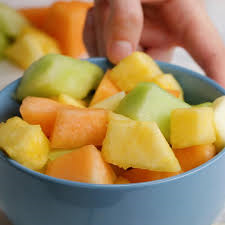
1 medium cantaloupe
1 small honeydew
2 mangoes
For the Dressing:
1/2 cup granulated sugar
Juice of one lime
1/2 cup pineapple juice
1 teaspoon ground ginger
Peel and slice both melons into long thin ribbons. This can easily be accomplished a mandoline
or slicer. Peel and cube mangoes. Place
all the cut fruit in a large bowl.
or slicer. Peel and cube mangoes. Place
all the cut fruit in a large bowl.
Combine sugar, lime juice, pineapple juice and ginger in
a small bowl. Pour dressing over the fruit and toss to combine. Allow the salad to stand 10 minutes to wake
up the flavors.
a small bowl. Pour dressing over the fruit and toss to combine. Allow the salad to stand 10 minutes to wake
up the flavors.