
The Culinary Connoisseur
Hot, Hot, Hot
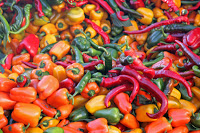
02
Jun
Jun
While hot peppers are not part of traditional kosher
cooking, they have become extremely popular in many households. Whether you add
them to dips or soups or eat them pickled out of a jar or can, hot peppers are
really very good for you so go ahead and indulge. One fresh medium sized green
chile pepper has as much Vitamin C as six oranges. Plus, hot chile peppers burn
calories by triggering a thermodynamic burn in the body, which speeds up the
metabolism. Capsaicin, the element that causes chili peppers to be hot is also
used as a pain killer and is thought to be an appetite suppressant as well.
cooking, they have become extremely popular in many households. Whether you add
them to dips or soups or eat them pickled out of a jar or can, hot peppers are
really very good for you so go ahead and indulge. One fresh medium sized green
chile pepper has as much Vitamin C as six oranges. Plus, hot chile peppers burn
calories by triggering a thermodynamic burn in the body, which speeds up the
metabolism. Capsaicin, the element that causes chili peppers to be hot is also
used as a pain killer and is thought to be an appetite suppressant as well.

Chile peppers originated in South America and were
introduced to Europe by explorers like Christopher Columbus. He came across
these new fruits when the Native Americans offered him some chile peppers. When he ate the pepper pods he felt the same
“burn” or “heat” felt from black peppercorns and he mistakenly called it
“pepper” which is why today chili peppers are called peppers. Columbus took the
fiery pods back to Spain and they quickly spread across the Eastern hemisphere
and are used in almost every international cuisine around the world. Chili
pepper plants are also grown in almost every country in the world. Chili peppers are available year round and in
the United States they are mainly grown in California, New Mexico, and Texas.
introduced to Europe by explorers like Christopher Columbus. He came across
these new fruits when the Native Americans offered him some chile peppers. When he ate the pepper pods he felt the same
“burn” or “heat” felt from black peppercorns and he mistakenly called it
“pepper” which is why today chili peppers are called peppers. Columbus took the
fiery pods back to Spain and they quickly spread across the Eastern hemisphere
and are used in almost every international cuisine around the world. Chili
pepper plants are also grown in almost every country in the world. Chili peppers are available year round and in
the United States they are mainly grown in California, New Mexico, and Texas.
Be careful when you handle any kind of chile peppers.
They contain oils which can burn your skin and especially your eyes. Avoid
direct contact as much as possible. Many cooks wear rubber gloves while
handling chilies. After you have worked with them, be sure to wash your hands
and nails thoroughly with soap and water.
They contain oils which can burn your skin and especially your eyes. Avoid
direct contact as much as possible. Many cooks wear rubber gloves while
handling chilies. After you have worked with them, be sure to wash your hands
and nails thoroughly with soap and water.
Most of the heat in chili peppers is in the seeds and
ribs of the pepper. If you prefer your foods a bit “cooler” leave out most of
the inner ribs and seeds when adding fresh hot peppers to a dish.
ribs of the pepper. If you prefer your foods a bit “cooler” leave out most of
the inner ribs and seeds when adding fresh hot peppers to a dish.
There are over 25 types of chile peppers but these are
the most commonly used:
the most commonly used:
Anaheim or California Chili Peppers: Available green
or red. They are often stuffed or added to salsas. Anaheim chili peppers are
available year-round, but they’re best in the summer.
or red. They are often stuffed or added to salsas. Anaheim chili peppers are
available year-round, but they’re best in the summer.
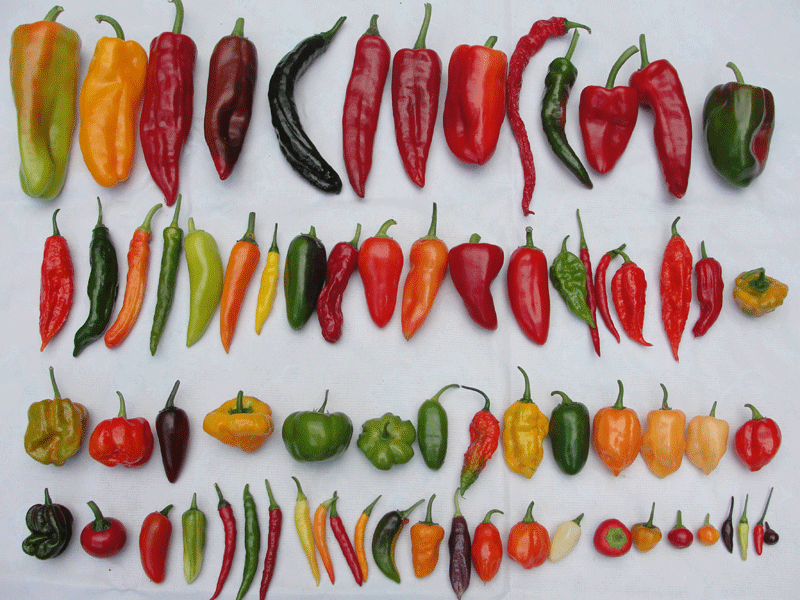
Ancho or Poblano Chili Peppers: A dried deep
reddish brown chile pepper about 3 inches wide and 4 inches long with a sweet
hot flavor. When fresh they are referred to as poblanos. They look like small
bell peppers. Anchos are flat, wrinkled, and heart shaped. They range in color
from very dark red to almost black. Anchos are mild to moderately hot and often
soaked and ground for use in sauces.
reddish brown chile pepper about 3 inches wide and 4 inches long with a sweet
hot flavor. When fresh they are referred to as poblanos. They look like small
bell peppers. Anchos are flat, wrinkled, and heart shaped. They range in color
from very dark red to almost black. Anchos are mild to moderately hot and often
soaked and ground for use in sauces.
Banana Chili Peppers: Also known as yellow wax
pepper and banana chili. Its name comes from the fact that its shape and color
resemble a banana. Most banana chile peppers are typically yellow, but they can
also be orange or red. Yellow peppers are generally served pickled.
pepper and banana chili. Its name comes from the fact that its shape and color
resemble a banana. Most banana chile peppers are typically yellow, but they can
also be orange or red. Yellow peppers are generally served pickled.
Cayenne Chili Peppers: These peppers range from 4
to 12 inches in length and are one of the most common chile peppers available.
You will find them ranging from deep green, yellow and orange to dark red. They
are long, skinny, and wrinkled in appearance.
to 12 inches in length and are one of the most common chile peppers available.
You will find them ranging from deep green, yellow and orange to dark red. They
are long, skinny, and wrinkled in appearance.
Cherry Chili Peppers: Also known as hot cherry
pepper or Hungarian cherry pepper. These peppers are round and red and are sold
fresh or pickled in jars, these chile peppers range from mild to moderately hot.
pepper or Hungarian cherry pepper. These peppers are round and red and are sold
fresh or pickled in jars, these chile peppers range from mild to moderately hot.
Chipotle Chile Peppers: They are a dried jalapeno
chile pepper. These chile peppers are slowly smoked over a natural wood fire
until they are infused with a smoky flavor and are completely dried. They can
then ground into a chipotle powder that can easily be used to add a spicy
flavor any food.
chile pepper. These chile peppers are slowly smoked over a natural wood fire
until they are infused with a smoky flavor and are completely dried. They can
then ground into a chipotle powder that can easily be used to add a spicy
flavor any food.
Habanero Chile Peppers: These are the hottest
pepper grown commercially with intense fiery flavor, a unique floral flavor,
and an extremely intense heat that affects the nasal passages.
pepper grown commercially with intense fiery flavor, a unique floral flavor,
and an extremely intense heat that affects the nasal passages.
Jalapeno Chile Peppers: Most often green when
mature but sometimes red. They are very hot, with an immediate bite. Use
whenever recipe simply calls for hot chile peppers. They can be fresh or
canned. Small ones are known as Serrano
peppers.
mature but sometimes red. They are very hot, with an immediate bite. Use
whenever recipe simply calls for hot chile peppers. They can be fresh or
canned. Small ones are known as Serrano
peppers.
While you can add a chili pepper to everything from
chicken soup to chocolate cake we like to stick to dishes that are
traditionally thought of as “hot.”
chicken soup to chocolate cake we like to stick to dishes that are
traditionally thought of as “hot.”
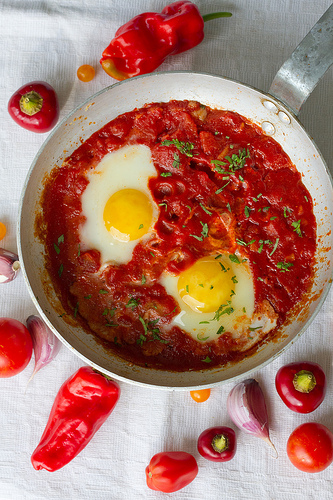
4 tablespoons olive oil
2 large onions, yellow or white
1 15 ounce can crushed tomatoes
2 large tomatoes, grated or chopped
4 cloves of garlic
1 red bell pepper, chopped
1 green bell pepper, chopped
1 hot pepper, preferably cayenne or jalapeno
1 teaspoon ketchup
1 tablespoon brown sugar
8 eggs
In a large, deep pan, heat oil, approximately 2-3
minutes. Chop onions and sauté in oil, stirring occasionally, until golden in
color. Peel garlic cloves, mince or slice thinly, and add to onions, stirring
once or twice.
minutes. Chop onions and sauté in oil, stirring occasionally, until golden in
color. Peel garlic cloves, mince or slice thinly, and add to onions, stirring
once or twice.
In a separate bowl, place the red and green peppers, and
mix with crushed tomatoes. Add the other tomatoes, along with the ketchup and
the brown sugar. Finely chop the hot pepper, and add according to taste, either
just the outer flesh or the entire pepper, including ribs and seeds.
mix with crushed tomatoes. Add the other tomatoes, along with the ketchup and
the brown sugar. Finely chop the hot pepper, and add according to taste, either
just the outer flesh or the entire pepper, including ribs and seeds.
Pour tomato-pepper mixture into the pan, and stir into
the onions, garlic and oil. Cook on a medium-high flame for 5-7 minutes,
stirring occasionally, until the mixture begins to bubble. Reduce flame to low
and place the cover a bit off the edge of the pan, allowing the liquid to evaporate
and reduce. Cook for 15-17 minutes more, stirring every few minutes.
the onions, garlic and oil. Cook on a medium-high flame for 5-7 minutes,
stirring occasionally, until the mixture begins to bubble. Reduce flame to low
and place the cover a bit off the edge of the pan, allowing the liquid to evaporate
and reduce. Cook for 15-17 minutes more, stirring every few minutes.
Next comes the tricky part: Break and check the eggs into
a small bowl. Carefully pour the eggs over the sauce, making sure they don’t
touch one another. Cover the pan completely, raise flame to medium and cook for
another 4-6 minutes, or until eggs are no longer runny. If you like your eggs
well-done, allow an additional 2-3 minutes.
a small bowl. Carefully pour the eggs over the sauce, making sure they don’t
touch one another. Cover the pan completely, raise flame to medium and cook for
another 4-6 minutes, or until eggs are no longer runny. If you like your eggs
well-done, allow an additional 2-3 minutes.
Remove from flame and divide equally among 4 plates.
Serve immediately with fresh bread to soak up the sauce.
Serve immediately with fresh bread to soak up the sauce.