
The Culinary Connoisseur
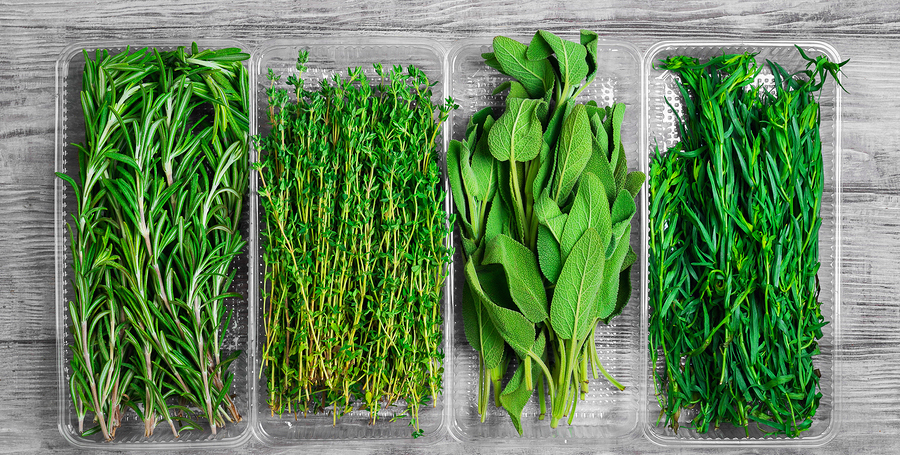
Rosemary Sage Parsley and Thyme
14
Feb
Feb
You may have grown up with just paprika and garlic powderin your mother’s kitchen cabinet; or possibly cumin and turmeric if you’re of
Sephardic heritage. Herbs like rosemary
and thyme were not part of most Jewish cuisine. Nowadays ingredients like these
are found in all kosher cookbooks and while some skip those dishes, many cooks
will venture out of their comfort zone to try new flavors. Herbs add depth of flavor to dishes so people
can use herbs to cut back on sodium intake, as less salt is used to flavor a
meal.
Rosemary is a fragrant herb native to the Mediterranean.
It is a member of the mint family along with many other herbs,
such as oregano, thyme, basil, and lavender. The herb not only tastes good but
it is also a good source of iron, calcium, and vitamin B-6.
It is a member of the mint family along with many other herbs,
such as oregano, thyme, basil, and lavender. The herb not only tastes good but
it is also a good source of iron, calcium, and vitamin B-6.
Sage is also native to the Mediterranean and belongs to
the same botanical family. It’s got high antioxidant capacities and pack
extra flavor into a meal. Sage has a
long history of medicinal use for ailments ranging from mental disorders to
gastrointestinal discomfort.
the same botanical family. It’s got high antioxidant capacities and pack
extra flavor into a meal. Sage has a
long history of medicinal use for ailments ranging from mental disorders to
gastrointestinal discomfort.
Parsley is the world’s most popular herb. It is a good
source of folic acid, one of the most important B vitamins. Parsley is native
to the Mediterranean region of Southern Europe. While it has been cultivated
for more than 2,000 years, parsley was used medicinally prior to being consumed
as a food. While it is uncertain when
parsley began to be consumed as a seasoning, it seems to be sometime in the
Middle Ages in Europe.
source of folic acid, one of the most important B vitamins. Parsley is native
to the Mediterranean region of Southern Europe. While it has been cultivated
for more than 2,000 years, parsley was used medicinally prior to being consumed
as a food. While it is uncertain when
parsley began to be consumed as a seasoning, it seems to be sometime in the
Middle Ages in Europe.
Thyme is sold both fresh and dried. Thyme retains its
flavor when dried better than many other herbs. The condiment za’atar contains
thyme as its main ingredient. It is also a component of the bouquet garni,
and of herbes de Provence.
flavor when dried better than many other herbs. The condiment za’atar contains
thyme as its main ingredient. It is also a component of the bouquet garni,
and of herbes de Provence.
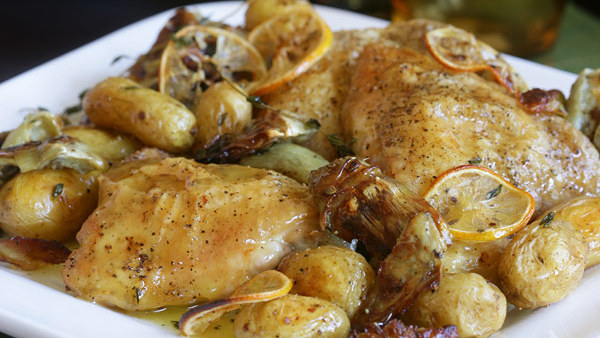
This sheet pan dinner is so flavorful it will earn a
permanent spot on your recipe rotation.
permanent spot on your recipe rotation.
4 cloves garlic
kosher salt
3 to 4 tablespoons extra-virgin olive oil
12 chicken thighs, rinsed, and patted dry
2 large lemons, each cut into thick rounds
1 bunch fresh rosemary, snipped into 2-inch pieces or 1
tablespoon dried
tablespoon dried
1 bunch fresh thyme, snipped into 2-inch pieces or 1
tablespoon dried
tablespoon dried
12 sage leaves or 1 tablespoon dried
½ cup fresh parsley, chopped or 1 tablespoon dried
2 pounds small new potatoes, washed
Freshly ground black pepper
Crush the garlic and place in a small bowl and add the salt
and oil and stir together until combined. Rub the garlic mixture all over the
chicken, including under the skin. Cover and refrigerate at least 2 hours or
overnight.
Heat the oven to 375°F and set an oven rack in the middle of the oven.
and oil and stir together until combined. Rub the garlic mixture all over the
chicken, including under the skin. Cover and refrigerate at least 2 hours or
overnight.
Heat the oven to 375°F and set an oven rack in the middle of the oven.
Arrange the lemon slices in one layer in a large shallow
roasting pan or baking dish. Top each slice with some of each herb; rosemary, thyme,
sage and parsley. Place the chicken thighs, skin side up, on top of the herbs.
Add the potatoes to the pan and sprinkle everything generously with salt and
pepper. Bake until the skin is golden and the juices are clear, 45 minutes to 1
hour. Serves 6-8
roasting pan or baking dish. Top each slice with some of each herb; rosemary, thyme,
sage and parsley. Place the chicken thighs, skin side up, on top of the herbs.
Add the potatoes to the pan and sprinkle everything generously with salt and
pepper. Bake until the skin is golden and the juices are clear, 45 minutes to 1
hour. Serves 6-8
1 large onion, diced
6 tablespoons olive oil
1 tablespoon chopped fresh rosemary or 1/2
tablespoon dried
tablespoon dried
1 tablespoon chopped fresh thyme or 1/2
tablespoon dried
tablespoon dried
1 tablespoon chopped fresh sage or 1/2
tablespoon dried
tablespoon dried
2 tablespoons chopped fresh parsley or 1/2
tablespoon dried
tablespoon dried
2 cups diced pastrami
3 to 4 cups cooked long grain rice
Salt to taste
Heat the olive oil in a pan. Add the onion and herbs.
Cook over medium-low heat until fragrant and the onions are translucent.
Cook over medium-low heat until fragrant and the onions are translucent.
Turn up the heat to medium. Add the pastrami. Cook,
stirring, for about a minute. Turn off the heat. Stir in the cooked rice. Serve immediately.
stirring, for about a minute. Turn off the heat. Stir in the cooked rice. Serve immediately.