
The Culinary Connoisseur
Fuzzy Fruit
31
Aug
Aug

The kiwifruit originated in China and were originally
called sun fruit or Chinese gooseberry.
Famers and importer decided that these long names would keep this tasty
fruit from becoming popular so they renamed it for the natives of the land
where it was cultivated—New Zealand.
called sun fruit or Chinese gooseberry.
Famers and importer decided that these long names would keep this tasty
fruit from becoming popular so they renamed it for the natives of the land
where it was cultivated—New Zealand.
Kiwis have a very short history. They were virtually
unknown in the western world until the mid-1900’s. In the early 20th century the
plants were exported to New Zealand where they began to gain popularity because
of their delicious and distinctive taste. In 1952 the first shipment of kiwis
went to England where they became an immediate success. It didn’t take long for
growers in California to realize that their climate was perfect for growing
plump juicy kiwis. By 1970 the first crop grew in California and took the US by
storm. The speed at which they became popular is a testimony to their excellent
flavor.
unknown in the western world until the mid-1900’s. In the early 20th century the
plants were exported to New Zealand where they began to gain popularity because
of their delicious and distinctive taste. In 1952 the first shipment of kiwis
went to England where they became an immediate success. It didn’t take long for
growers in California to realize that their climate was perfect for growing
plump juicy kiwis. By 1970 the first crop grew in California and took the US by
storm. The speed at which they became popular is a testimony to their excellent
flavor.
The most common kiwifruit are oval, about the size of a
large egg. They have hairy, mat brown skin and bright green flesh with rows of
tiny, black, edible seeds. The fruit has a soft texture and a distinctive
flavor. The newer “golden Kiwi” took
over ten years to cultivate. It has smooth skin and soft golden flesh. It is
also sweeter than traditional green kiwis with less seeds.
large egg. They have hairy, mat brown skin and bright green flesh with rows of
tiny, black, edible seeds. The fruit has a soft texture and a distinctive
flavor. The newer “golden Kiwi” took
over ten years to cultivate. It has smooth skin and soft golden flesh. It is
also sweeter than traditional green kiwis with less seeds.
Kiwis can be eaten raw or cooked in many dishes. The skin
can be eaten as well although most people tend to peel them. While it has many
benefits it is also one of the fruits that people tend to be allergic to. Specifically, people allergic to latex or
pineapples are likely to also be allergic to kiwifruit.
can be eaten as well although most people tend to peel them. While it has many
benefits it is also one of the fruits that people tend to be allergic to. Specifically, people allergic to latex or
pineapples are likely to also be allergic to kiwifruit.
Enjoy kiwis by adding them to all your dishes, from
appetizers to desserts
appetizers to desserts
For the relish:
3 kiwifruit, peeled, diced
1 orange, peeled, segmented, chopped
1 medium red bell pepper, seeded, diced
1 medium tomato, diced
1 small red onion, diced
1 small jalapeno pepper, seeded, diced
1 tablespoon rice vinegar or white vinegar
1/2 teaspoon each kosher salt and freshly ground pepper
3 kiwifruit, peeled, diced
1 orange, peeled, segmented, chopped
1 medium red bell pepper, seeded, diced
1 medium tomato, diced
1 small red onion, diced
1 small jalapeno pepper, seeded, diced
1 tablespoon rice vinegar or white vinegar
1/2 teaspoon each kosher salt and freshly ground pepper
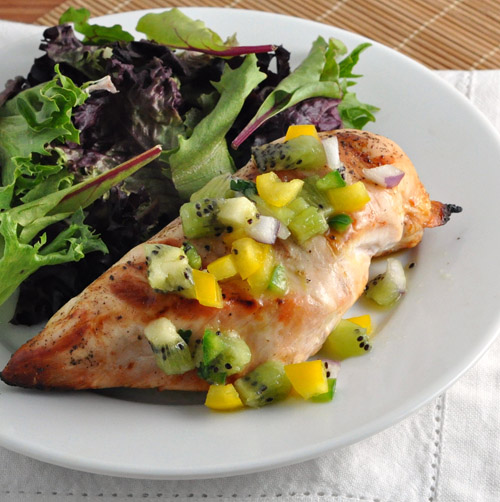
For the chicken:
4 chicken breasts
1/2 teaspoon black pepper
2 tablespoons light olive oil or canola oil
4 chicken breasts
1/2 teaspoon black pepper
2 tablespoons light olive oil or canola oil
Prepare the relish:
Combine all ingredients in medium bowl; set aside to
allow flavors to mingle.
allow flavors to mingle.
Prepare the chicken:
Preheat grill or grill pan to high.
Butterfly open or pound chicken to half the original
thickness. Sprinkle chicken breast with pepper. Brush lightly with oil. Grill
chicken on one side for 4-5 minutes until browned. Flip chicken grill the second
side 4-5 minutes longer.
thickness. Sprinkle chicken breast with pepper. Brush lightly with oil. Grill
chicken on one side for 4-5 minutes until browned. Flip chicken grill the second
side 4-5 minutes longer.
Transfer to serving platter and dress with the relish.
Serve immediately.
Serve immediately.
For the glaze:
2 kiwifruit, peeled and cut in half
2 tablespoons lemon juice
1/2 cup honey
1 teaspoon fresh ginger, grated
1/2 teaspoon ground cinnamon
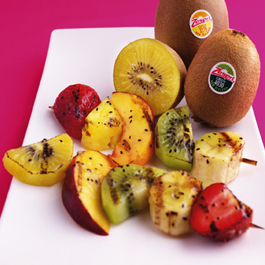
For the fruit skewers:
2 kiwifruit, peeled and cut in half
2 tablespoons lemon juice
1/2 cup honey
1 teaspoon fresh ginger, grated
1/2 teaspoon ground cinnamon
For the fruit skewers:
2 peaches or nectarines, peeled, pitted and cut into
1-inch pieces
1/2 pineapple, peeled, cored and cut into 1-inch chunks
1-inch pieces
1/2 pineapple, peeled, cored and cut into 1-inch chunks
8 kiwifruit, peeled and cut in half widthwise8 strawberries, hulled (optional)
2 bananas, peeled and cut into 1-inch pieces
8 wooden skewers
Prepare the glaze:
Puree kiwis, lemon juice, honey, ginger and cinnamon in
food processor until smooth. Do not crush kiwifruit seeds; set aside.
food processor until smooth. Do not crush kiwifruit seeds; set aside.
Place fruit in large bowl. Pour pureed kiwifruit glaze
over fruit and gently toss to coat. Marinate for 30 minutes.
over fruit and gently toss to coat. Marinate for 30 minutes.
Prepare the kabobs:
Brush the grill rack with oil. Preheat grill to medium
heat.
heat.
Arrange alternating fruit on skewers. Grill fruit over
medium heat for 5 minutes on each side, brushing with puree until light brown. Serve
immediately, alone or with vanilla ice cream.
medium heat for 5 minutes on each side, brushing with puree until light brown. Serve
immediately, alone or with vanilla ice cream.