
The Culinary Connoisseur
Mellowed Out
15
Jun
Jun
The original marshmallow was actually taken from the
roots of the marshmallow plant and used as a remedy for sore throats. Potions
and brews made of other parts of the marshmallow plant had medical uses as
well.
roots of the marshmallow plant and used as a remedy for sore throats. Potions
and brews made of other parts of the marshmallow plant had medical uses as
well.
The use of marshmallow plants to make a candy dates back
to ancient Egypt, where the recipe called for extracting sap from the plant and
mixing it with nuts and honey. The stem was peeled back to reveal the soft and
spongy flesh, which was boiled in sugar syrup and dried to produce a soft,
chewy confection.
Candymakers in early 19th century France modernized the candy by whipping up
the marshmallow sap and sweetening it. This treat was made locally in small
candy stores. The candy was very popular but making it was difficult and time
consuming. In the late 19th century, French manufacturers devised a way to get
around this by using egg whites or gelatin, combined with corn starch, to
create the chewy base. This was much easier than extracting the sticky
substance from the marshmallow roots.
to ancient Egypt, where the recipe called for extracting sap from the plant and
mixing it with nuts and honey. The stem was peeled back to reveal the soft and
spongy flesh, which was boiled in sugar syrup and dried to produce a soft,
chewy confection.
Candymakers in early 19th century France modernized the candy by whipping up
the marshmallow sap and sweetening it. This treat was made locally in small
candy stores. The candy was very popular but making it was difficult and time
consuming. In the late 19th century, French manufacturers devised a way to get
around this by using egg whites or gelatin, combined with corn starch, to
create the chewy base. This was much easier than extracting the sticky
substance from the marshmallow roots.
In 1948 candy makers came up with a process of running
the ingredients through tubes, and then pushing out the finished product as a
soft cylinder, which is then cut into sections and rolled in a mixture of
finely powdered cornstarch and confectioner’s sugar—much like the marshmallows
we enjoy today.
the ingredients through tubes, and then pushing out the finished product as a
soft cylinder, which is then cut into sections and rolled in a mixture of
finely powdered cornstarch and confectioner’s sugar—much like the marshmallows
we enjoy today.
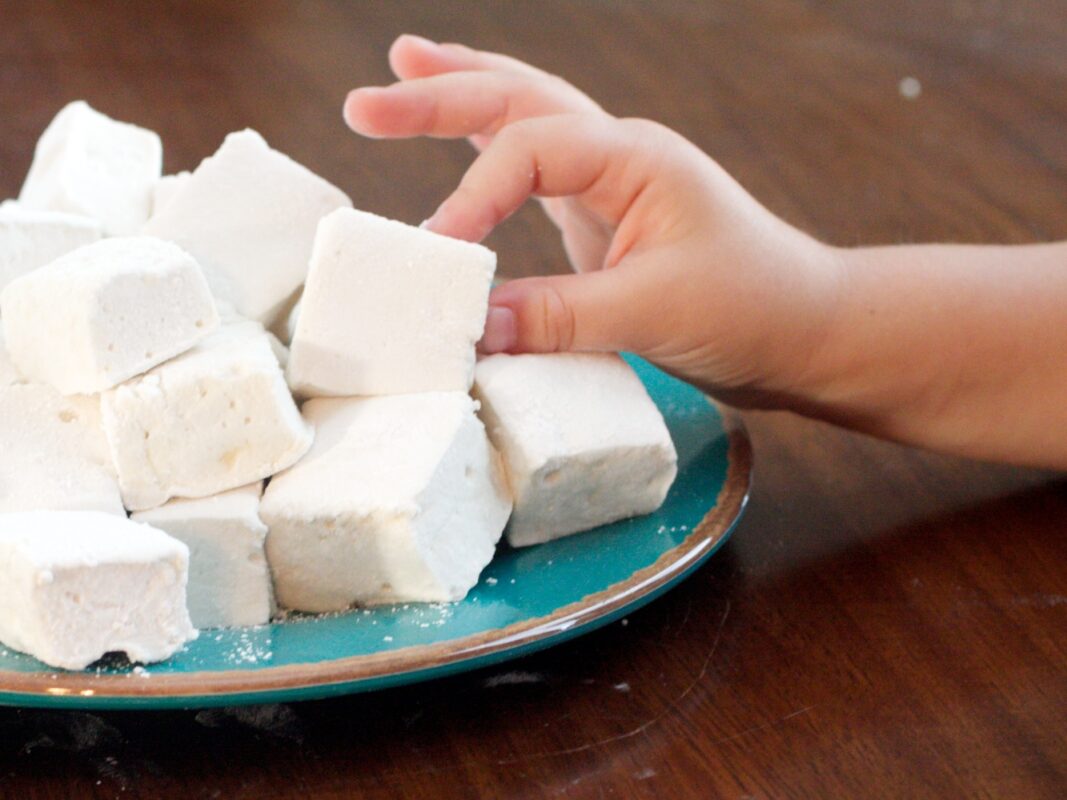
While most of us purchase marshmallows in neat plastic
bags, many an intrepid cook will want to try making marshmallows at home. It is
a simple process that yields much tastier results. You will need a candy
thermometer for this recipe. They can be purchased for about $5.
bags, many an intrepid cook will want to try making marshmallows at home. It is
a simple process that yields much tastier results. You will need a candy
thermometer for this recipe. They can be purchased for about $5.
3 envelopes unflavored gelatin *

1 cup ice cold water, divided
1 ½ cups granulated sugar
1 cup light corn syrup
1/4 teaspoon kosher salt
1 teaspoon vanilla extract
1/4 cup confectioners’ sugar
1/4 cup cornstarch
Nonstick spray
*available at The Peppermill
Place the gelatin into your stand mixer along with 1/2
cup of the water.
cup of the water.
In a small saucepan combine the remaining 1/2 cup water,
sugar, corn syrup and salt. Place over medium high heat, cover and cook for 3
to 4 minutes.
sugar, corn syrup and salt. Place over medium high heat, cover and cook for 3
to 4 minutes.
Uncover, clip a candy thermometer onto the side of the
pan and continue to cook until the mixture reaches 240 degrees F, approximately
7 to 8 minutes. Once the mixture reaches this temperature, immediately remove
from the heat.
pan and continue to cook until the mixture reaches 240 degrees F, approximately
7 to 8 minutes. Once the mixture reaches this temperature, immediately remove
from the heat.
Turn the mixer on to low and slowly pour the sugar syrup
down the side of the bowl into the gelatin mixture. Once you have added all of
the syrup, increase the speed to high. Continue to whip until the mixture
becomes very thick and is lukewarm, approximately 12 to 15 minutes. Add the
vanilla during the last minute of whipping.
down the side of the bowl into the gelatin mixture. Once you have added all of
the syrup, increase the speed to high. Continue to whip until the mixture
becomes very thick and is lukewarm, approximately 12 to 15 minutes. Add the
vanilla during the last minute of whipping.
While the mixture is whipping prepare the pans.
For regular marshmallows:
Combine the confectioners’ sugar and cornstarch in a
small bowl. Lightly spray a 13 by 9-inch metal baking pan with nonstick cooking
spray. Add the sugar and cornstarch mixture and shake around to completely coat
the bottom and sides of the pan. Return the remaining mixture to the bowl.
small bowl. Lightly spray a 13 by 9-inch metal baking pan with nonstick cooking
spray. Add the sugar and cornstarch mixture and shake around to completely coat
the bottom and sides of the pan. Return the remaining mixture to the bowl.
When the marshmallow mixture is ready, pour the mixture
into the prepared pan, using a lightly oiled spatula for spreading evenly into
the pan. Dust the top with the remaining sugar and cornstarch mixture to
lightly cover. Reserve the rest for later. Allow the marshmallows to sit
uncovered for at least 4 hours and up to overnight.
into the prepared pan, using a lightly oiled spatula for spreading evenly into
the pan. Dust the top with the remaining sugar and cornstarch mixture to
lightly cover. Reserve the rest for later. Allow the marshmallows to sit
uncovered for at least 4 hours and up to overnight.
Turn the marshmallows out onto a cutting board and cut
into 1-inch squares using a pizza wheel or cookie cutters dusted with the
confectioners’ sugar mixture. Once cut, lightly dust all sides of each
marshmallow with the remaining mixture, using additional if necessary. Store in
an airtight container for up to 3 weeks.
into 1-inch squares using a pizza wheel or cookie cutters dusted with the
confectioners’ sugar mixture. Once cut, lightly dust all sides of each
marshmallow with the remaining mixture, using additional if necessary. Store in
an airtight container for up to 3 weeks.