
The Culinary Connoisseur
Tu B’Shvat Bounty
Tu B’Shvat is the New Year for the purpose of calculating
the age of trees for “orlah.” The fruit from new trees may not be eaten
during the first three years; the fourth year’s fruit is brought to
Yerushalayim and after that, you can eat the fruit. Each tree is considered to
have aged one year as of Tu B’Shvat, so if you planted a tree on the 14th
of Shevat, it begins it second year the next day, but if you plant a tree two
days later, on Shevat 16, it does not reach its second year until the next Tu
B’Shvat.
Bais Hillel and Bais Shamai as to the proper date for the holiday. Bais Shamai says it should be Rosh Chodesh
Shvat while Bais Hillel says the proper date is the fifteenth. As with other decisions, we follow the ruling
of Bais Hillel.
B’Shvat. One custom is to eat a new fruit on this day. Others eat fruits of the
Shivas Haminim. In Eretz Yisrael some people plant trees on
this day.
that of the Hebrew word “shefa.”
While eating our fruit, it behooves us to remember the bounty of Hakadosh
Baruch Hu and be thankful for all that we receive.
beautiful esrog for next Succos. In
addition, many eat jam or compote made from the esrog that they used this past
Succos. It is considered a healing food and
has much mystical significance.
the home and family life. Wheat brings
to mind shalom bayis as it says (tehilim 147) “hasum gevulaych shalom
chaylev chitim yasbaych.” Also in
tehilim (128) it refers to one’s wife as a “gefen poriah” and one’s
children as “shisilei zaisim,” once again comparing the family to the
fruits of Eretz Yisrael. The hidden
tasty seeds of the pomegranate reminds us of the pasuk “kol kvuda bas melech
pnima” and d’vash is reminiscent of young children learning as it
says “d’vash v’chalav tachas l’shonaych.”
that are celebrated are those of Rosh Hashanah and Tu B’Shvat. The significance of the trees’ New Year must
be as great as that of our new year in the eyes of Hashem. Many people are nohaig to learn
Meseches Rosh Hashanah on Tu B’Shvat as well as the halachos of orlah.
Try this salad for Tu B’Shvat this year:
Pomegranate Dressed Salad
1 bag romaine hearts
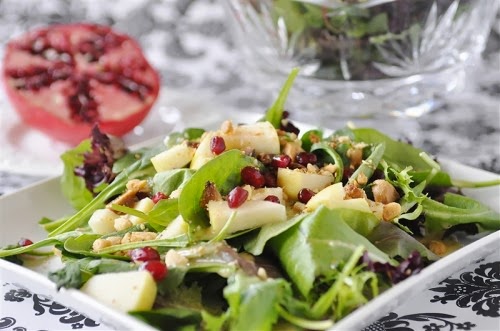 1 cup pomegranate seeds
2 apples, cut in chunks, Pink Lady or Honey Crisp
10-12 dried figs, quartered
½ cup slivered almonds, toasted
1/4 cup pomegranate juice
2 tablespoons mayonnaise
2 tablespoons lemon juice
1 teaspoon sugar
Freshly ground pepper, to taste
1/4 cup olive oil
combine.
in your food processor. With the motor running, gradually drizzle in the olive
oil until the dressing is combined and thick.
Our recipes below put to use some of the shivas
haminim in delicious, easy desserts for your family.
Roasted Bosc Pears with Pomegranate Glaze
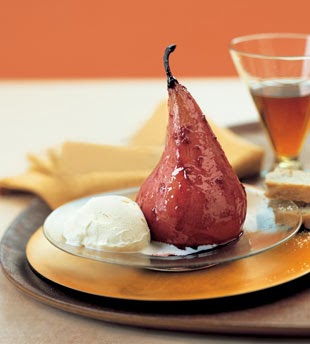
¾ cup dry red wine
¾ cup pomegranate juice
½ cup sugar
1 cinnamon stick
2 teaspoons grated orange peel
6 Bosc pears with stems, peeled
vanilla ice cream (pareve or milchig)
Preheat oven to 350 degrees. In a medium saucepan, stir wine, pomegranate
juice, sugar, cinnamon stick and orange peel until sugar dissolves, about three
minutes.
baler. Trim the bottoms flat and stand
pears upright in a 9” baking dish. Pour
wine sauce over pears and roast for one hour, basting every 20 minutes. Pears should be tender when pierced with a
knife. Using a spatula, transfer the
pears to a serving platter. Pour juices
into a small saucepan and simmer to reduce to 2/3 cup, about 5 minutes.
Serve warm with vanilla ice cream.
fruit. In years past most fruit eaten on
Tu B’Shvat was prepared and dried during the summer. We keep up this tradition of eating dried
fruit as well. This recipe uses both
fresh and dried for maximum fruit flavor.
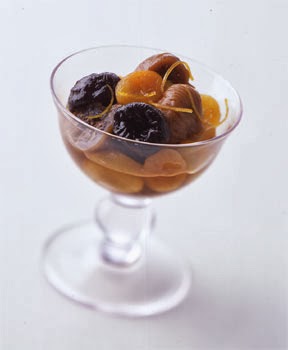
1 orange
1 cup sugar
2 cinnamon sticks
½ vanilla bean, split
3 ½ cups water
4 large ripe Anjou
or Bosc pears, peeled, cored and cut into wedges
4 Golden Delicious apples, peeled, cored and cut into
wedges
1 cup dried cranberries (craisins)
6 ounces dried peaches, cut in half
Peel 3 strips of zest from orange using a vegetable
peeler. Squeeze ½ cup juice from the
orange. Set aside.
vanilla bean, orange peel, and 3½ cups water. Heat to
boiling over high heat and stir until sugar dissolves. Reduce heat to medium, cover and simmer for
10 minutes, stirring occasionally.
fruit is tender. Stir in craisins and
peaches and cook 2 minutes longer. Stir
in orange juice. Cover and refrigerate
at least 4 hours or up to 3 days to allow flavors to blend.