
The Culinary Connoisseur
It’s Alive
21
Aug
Aug
This year’s early Rosh Hashanah means we need to start
thinking about our Yom Tov preparation before the summer fun ends. The first
thing on our minds is definitely our round challah. How many will we need? How
many can we fit in the freezer? You get the picture!
The best challah is light and airy but do we ever think
about the yeast that gives the challah its rise?
about the yeast that gives the challah its rise?
Yeast is a living organism that feeds off the sugars in
dough–both the actual sugar added to the recipe and the sugar produced by the
starch in the flour. Challah dough can rise even without added sweeteners. Yeast ferments the sugars, converting them
into carbon dioxide bubbles that are trapped within the crust as the dough
bakes, creating air pockets that are so desirable in all types of bread. The
yeast cells take in oxygen from the air in the dough and reproduce by dividing
themselves many times. Each yeast cell multiplies until it becomes a clump of
cells. “Punching down” your dough breaks up these cell clusters and allows more
air to reach the individual yeast cells, in turn causing greater rise. If you
allow your yeast dough to rise a second time, make it much shorter than the
first because the cells are growing faster. Just be sure not to let the dough
over-rise. It will develop a sour smell
and will lose strength and may even collapse.
dough–both the actual sugar added to the recipe and the sugar produced by the
starch in the flour. Challah dough can rise even without added sweeteners. Yeast ferments the sugars, converting them
into carbon dioxide bubbles that are trapped within the crust as the dough
bakes, creating air pockets that are so desirable in all types of bread. The
yeast cells take in oxygen from the air in the dough and reproduce by dividing
themselves many times. Each yeast cell multiplies until it becomes a clump of
cells. “Punching down” your dough breaks up these cell clusters and allows more
air to reach the individual yeast cells, in turn causing greater rise. If you
allow your yeast dough to rise a second time, make it much shorter than the
first because the cells are growing faster. Just be sure not to let the dough
over-rise. It will develop a sour smell
and will lose strength and may even collapse.
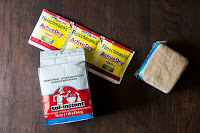
Yeast is available in three forms: fresh cake yeast,
active dry yeast, and quick-rise or instant yeast. Cake or compressed yeast,
found in 2-ounce cubes or 1-pound blocks, is the most active type and will
produce great amounts of carbon dioxide resulting in well risen challah and
bread. However, its shelf life is short
and should be used well within the date stamped on the package. Always purchase
it from groceries that have a quick turnover.
This yeast is alive and will even expand when mixed with cool water;
approximately 70-80 degrees Fahrenheit.
Compressed yeast or cake yeast may be frozen for up to 6 months. Wrap
well in foil and seal in zip-lock freezer bags. Once defrosted, the yeast will
not be crumbly but rather creamy. It should still be quite active.
active dry yeast, and quick-rise or instant yeast. Cake or compressed yeast,
found in 2-ounce cubes or 1-pound blocks, is the most active type and will
produce great amounts of carbon dioxide resulting in well risen challah and
bread. However, its shelf life is short
and should be used well within the date stamped on the package. Always purchase
it from groceries that have a quick turnover.
This yeast is alive and will even expand when mixed with cool water;
approximately 70-80 degrees Fahrenheit.
Compressed yeast or cake yeast may be frozen for up to 6 months. Wrap
well in foil and seal in zip-lock freezer bags. Once defrosted, the yeast will
not be crumbly but rather creamy. It should still be quite active.
Active dry yeast, the most widely available, is activated
when dissolved in warm water–105 to 115 degrees. You may prefer to proof this
yeast before adding other ingredients, but it isn’t really necessary.
when dissolved in warm water–105 to 115 degrees. You may prefer to proof this
yeast before adding other ingredients, but it isn’t really necessary.
Instant yeast, the newest type on the market, is a
stronger strain of dry yeast developed for commercial bakers in Europe and now
available to the home baker under the name Quick-rise or Rapid-rise. This yeast
is added to dry ingredients without being dissolved. Liquids used should
be warmer, 120 to 130 degrees. Quick-rise yeast should not be proofed as it
needs to feed immediately on the starch in the flour in order to expand. It is handy to keep a package on hand in your
freezer for use anytime you have an urge to whip up a batch of challah or
rugelach. It comes in 1 pound bags that
are vacuum-packed for freshness. Store it in the freezer once the package has
been opened.
stronger strain of dry yeast developed for commercial bakers in Europe and now
available to the home baker under the name Quick-rise or Rapid-rise. This yeast
is added to dry ingredients without being dissolved. Liquids used should
be warmer, 120 to 130 degrees. Quick-rise yeast should not be proofed as it
needs to feed immediately on the starch in the flour in order to expand. It is handy to keep a package on hand in your
freezer for use anytime you have an urge to whip up a batch of challah or
rugelach. It comes in 1 pound bags that
are vacuum-packed for freshness. Store it in the freezer once the package has
been opened.
Active dry and quick-rise yeasts may be used interchangeably,
however, dough will rise twice as fast using the instant type so don’t
substitute this in recipes for rustic breads like sourdough that require a long
resting period for flavor to develop. The speedy rise of instant yeast means
your challah dough will rise in 30-40 minutes making quick work of challah
baking.
however, dough will rise twice as fast using the instant type so don’t
substitute this in recipes for rustic breads like sourdough that require a long
resting period for flavor to develop. The speedy rise of instant yeast means
your challah dough will rise in 30-40 minutes making quick work of challah
baking.
 Three 1/4 ounce packets of any dry yeast (1 strip) are
equal to a 2 ounce cake of fresh yeast and can usually be used interchangeably
in most recipes. You will need to adjust only the water temperature.
One tablespoon of instant yeast is equal to 1 ounce of
fresh yeast or one and a half packets of dry yeast.
fresh yeast or one and a half packets of dry yeast.
Obviously, varying the amount of yeast in a recipe will
result in different dough textures. But
don’t keep adding yeast, thinking that you’ll get lighter dough; fat and
liquids in the recipe play a part as well in the unique chemical reactions
caused by the heat in the oven.
result in different dough textures. But
don’t keep adding yeast, thinking that you’ll get lighter dough; fat and
liquids in the recipe play a part as well in the unique chemical reactions
caused by the heat in the oven.
Now that you understand the science behind how yeast
works, you’re ready to get started on your baking.
works, you’re ready to get started on your baking.
5 pounds hi gluten flour, bakery flour or bread flour
3 tablespoons instant yeast
 3/4 cup sugar
5 cups warm water
3 extra large eggs or 4 large eggs
3/4 cup canola oil
3 tablespoons kosher salt
2 egg yolks plus 1 tablespoon water for egg wash
sesame or poppy seeds
Sift the flour into your mixer bowl. Add the instant
yeast and sugar. Stir to combine. Add eggs and oil. Add the water and
add the salt last. Mix at medium speed for 10-12
minutes.
Remove dough from the mixer bowl and allow to proof
(rise) in a large bowl covered with plastic wrap for 45 minutes. Take
“challah.” Divide the dough into 5 equal
parts.
(rise) in a large bowl covered with plastic wrap for 45 minutes. Take
“challah.” Divide the dough into 5 equal
parts.
Divide each part into 6 equal strands. Roll our each
strand to about 12” long. Place 3 strands vertically on your countertop. Place
the other 3 strands horizontally, weaving them under and over the first 3;
pushing them together in the center. You will be left with long strands
stretching outward. Gather three neighboring strands and braid them together
until the end. Repeat with remaining 9 strands, braiding each three
together. Tuck each braid under the
center woven part. Place the challah in an 8” or 9” pan sprayed with baking
spray or lined with parchment paper. Repeat with remaining 4 parts of dough.
strand to about 12” long. Place 3 strands vertically on your countertop. Place
the other 3 strands horizontally, weaving them under and over the first 3;
pushing them together in the center. You will be left with long strands
stretching outward. Gather three neighboring strands and braid them together
until the end. Repeat with remaining 9 strands, braiding each three
together. Tuck each braid under the
center woven part. Place the challah in an 8” or 9” pan sprayed with baking
spray or lined with parchment paper. Repeat with remaining 4 parts of dough.
Allow to rise 15
minutes longer. Beat eggs and gently brush egg wash over the challahs. Sprinkle
with poppy or sesame seeds.
minutes longer. Beat eggs and gently brush egg wash over the challahs. Sprinkle
with poppy or sesame seeds.
We like baking challah in a cold oven. It allows the
challah more rising time as the oven warms so there’s no need to preheat. Place
challahs in the oven and bake 45-50 minutes. Remove and cool on racks.
challah more rising time as the oven warms so there’s no need to preheat. Place
challahs in the oven and bake 45-50 minutes. Remove and cool on racks.