
The Culinary Connoisseur
Fabulous Feta
Jul
milchig dishes. If your family has not yet gotten to know and enjoy feta
cheese, now would be a great time to try it.
 Feta cheese is a rich and creamy soft cheese created in Greece,
originally made of fresh, unpasteurized whole sheep’s milk. Nowadays, there are versions made with goat’s
milk, cow’s milk or a mixture thereof. It’s
been around for centuries, and hardly a Greek meal does not incorporate feta
cheese in some manner. It is so popular in Greece that very little of the
cheese produced there gets exported.
to the original way of serving this cheese.
While it is classified as a soft cheese, feta is firm enough to cut easily
for attractive serving.
Australia, Denmark, Germany, and of course, the United States. Modern-day, less robust versions may be made
from cow’s milk, skimmed milk, or partially-skimmed milk. In the United
States it is unlawful to produce cheese from milk that
has not been pasteurized, so all feta made or imported to the US is
pasteurized.
goat’s milk. Good feta is aged four to six weeks and cured in a salty whey and
brine. Known as a pickled cheese, the flavor of feta becomes sharper and
saltier with age. It is creamy white in color with small holes, a crumbly
texture, and is normally found in square cakes with no rind. Feta is used crumbled
in salads and melted into filling for quiches and pies.
packaging to keep it moist. Feta cheese is best when eaten fresh, so always
check the date. If you won’t be consuming it immediately, store feta cheese in the
brine it came in or a milk bath. The milk bath will reduce the saltiness and
help keep the cheese moist and mild in flavor. Properly stored in brine or milk
and refrigerated, feta cheese will last up to three months. Do not freeze feta
cheese.
avoided as even if you have soaked it in a milk bath it will still retain lots
of salt.
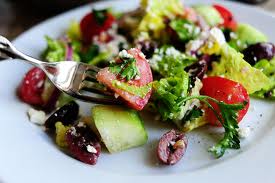
flavor compliment vegetables. Try our classic Greek Salad for supper tonight.
4 ripe but firm plum tomatoes
1 medium onion
1 seedless cucumber
½ teaspoon kosher salt
1 package feta cheese
½ cup black olives, sliced
½ teaspoon dried oregano
3 tablespoons olive oil
slices. Mix them in medium bowl with the salt and add crumbled feta cheese,
olives and oregano. Drizzle with olive
oil and serve.
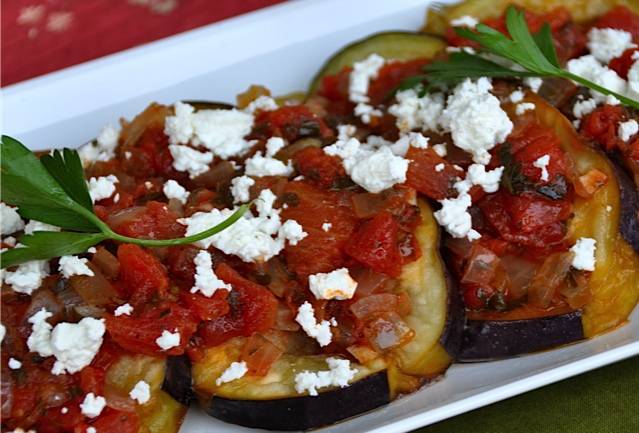
2 pounds of eggplants
Light olive oil for drizzling
½ cup fresh basil, checked and chopped
5 cloves of garlic, crushed
1 pound of ripe plum tomatoes, diced
1/2 pound of feta cheese, crumbled
kosher salt & freshly ground black pepper
Wash the eggplants and remove stems. Cut lengthwise into
1/2 inch slices. Brush generously with olive oil; sprinkle with salt and pepper
and lay the slices 9”x13” baking pan.
Combine the tomatoes, basil, garlic, and additional salt
and pepper to taste, in a bowl, and spoon the mixture over the eggplant. Top
with crumbled feta cheese, and bake for 45 minutes.
Serve warm, or at room temperature.
This combination makes a wonderful filling in pastries and hors d’eouvres. Our miniature version of Spanakopita, a
famous Greek spinach pie, makes a tasty addition to any dairy meal.
3 tablespoons light olive oil or canola oil
1 large onion, chopped

3 cloves garlic, crushed
16 ounces frozen spinach, thawed
Salt and pepper to taste
2 eggs, lightly beaten
12 ounces crumbled feta cheese
1/2 teaspoon nutmeg
1 stick butter, melted
1 package phyllo pastry sheets
1/2 cup grated Parmesan cheese
Heat olive oil
in a large skillet over medium heat. Sauté onions for 3 minutes until soft. Add
garlic and continue to sauté a minute longer.
Add the spinach, season with salt and pepper, and continue to sauté
until the spinach is heated through about 2 minutes.
excess liquid. Set aside to cool. The filling needs to be cool and dry to
prevent the phyllo from becoming soggy. In a medium bowl, beat the eggs with
feta, and nutmeg. Fold in the cooled spinach mixture until well blended.
Preheat oven to 375 degrees F. Line 2 baking sheets with parchment paper or
Silpat silicone mats. Unroll the phyllo
dough and lay it flat on a work surface. Take care to keep the phyllo covered
with a damp towel as you work to prevent drying out and becoming brittle. Take
one sheet from the pile and place it on your work surface. Brush it with melted butter, and top with
another sheet. Brush once again with butter. Repeat with 2 more sheets of
phyllo, stacking one on top of each other. With a sharp knife or pizza cutter,
cut the sheets lengthwise into thirds to form 2-1/2-inch wide strips.
Place a heaping teaspoon of filling near 1 corner of the layered phyllo strip.
Fold the end at an angle over the filling to form a triangle. Continue to fold
the triangle along the strip until you reach the end. Brush the top with butter
and dust with Parmesan, place on prepared baking sheet, and cover while
preparing the remaining pastries. Repeat until all the filling and phyllo
strips are used up.
golden. Serve hot, warm or cold. These
can also be frozen raw and baked as needed.